A.J. Weissbard
art, direction, and design, with light and space
BURN: Physical Storytelling and the Heterotopia of a Loft
By Ariadne Mikou
The relationship between theatre – more specifically the theatre play – and physical storytelling through dance is certainly not a recent tendency. Many choreographers have drawn inspiration from theatre plays, ranging from Ancient Greek tragedies, whose themes continue to speak powerfully to the nature of human experience even today, to contemporary scripts. Following a libretto, ballet works, more often than not, are based on the adaptation of a novel or a theatrical play into a story narrated through movement, gestures and the overall contribution of music, set, costume and light design – the fundamental components of a dance performance. In this process, the primary task of the body is to convey meaning through corporeal expression in the complete absence of words.
Within this framework, William Shakespeare is perhaps the playwright whose theatre plays, among them A Midsummer Night’s Dream, Romeo and Juliet, The Tempest and Taming of the Shrew, have most frequently been adapted for ballet. Since the late nineteenth century, countless choreographers, including Marius Petipa, Leonid Lavrovsky, George Balanchine, Kenneth MacMillan and Crystal Pite, have created their own interpretations of these theatre plays. At Teatro dell’Opera di Roma, the corps de ballet had the chance to perform in A Midsummer Night’s Dream in 1988, choreographed by Pierre Lacotte to the music of Felix Mendelssohn, while later that same year, Amedeo Amodio created his own version of Romeo and Juliet to the music score of Hector Berlioz. John Cranko’s Taming of the Shrew, originally created in 1969 for Stuttgart Ballet, was also restaged for the corps de ballet of Teatro dell’Opera di Roma in 1989 and 1997. During the period of Carla Fracci as Director of the corps de ballet (2000–2010), theatre director Beppe Menegatti staged several ballet works through an artistic approach grounded in the hybridisation of ballet and theatre.
Given the longstanding dialogue between ballet and the theatrical script, it is therefore no surprise that Teatro dell’Opera di Roma has courageously commissioned BURN, a visionary dance project for the theatre directed by acclaimed American artist A.J. Weissbard. The work is co-produced by the Musica per Roma Foundation with the support of the Orsolina28 Art Foundation. By investing in co-productions, Teatro dell’Opera di Roma continues to build on the premises of a rich artistic past while opening its doors to contemporary artistic creation.
From Burn This to BURN: Notes on a devised dance project for the theatre
Weissbard’s BURN is based on the play Burn This, written in 1987 by multi-award-winning playwright Lanford Wilson and first performed during the same year by the Circle Repertory Company, which he co-founded in New York in 1968. The original production starred Joan Allen and John Malkovich, whose recorded voice returns to Weissbard’s dance project for theatre, complementing the narrative on stage and further enriching the timeless music composed by the late Michael Galasso. Burn This is one of the lesser-known works by Wilson, but its intricate story powerfully reflects downtown New York in the late 1980s, when the AIDS epidemic devastated much of the homosexual and bisexual community of the American metropolis. Indeed, the play emerged during the AIDS era, carrying the traces of late postmodern dance and theatre, which by then had already abandoned the analytical, often austere, anti-spectacular and anti-narrative approach of the 1960s. In their place, dance and theatre artists embraced interdisciplinarity, cultural pluralism and a range of political concerns, including Black identity and the issues of the queer community.
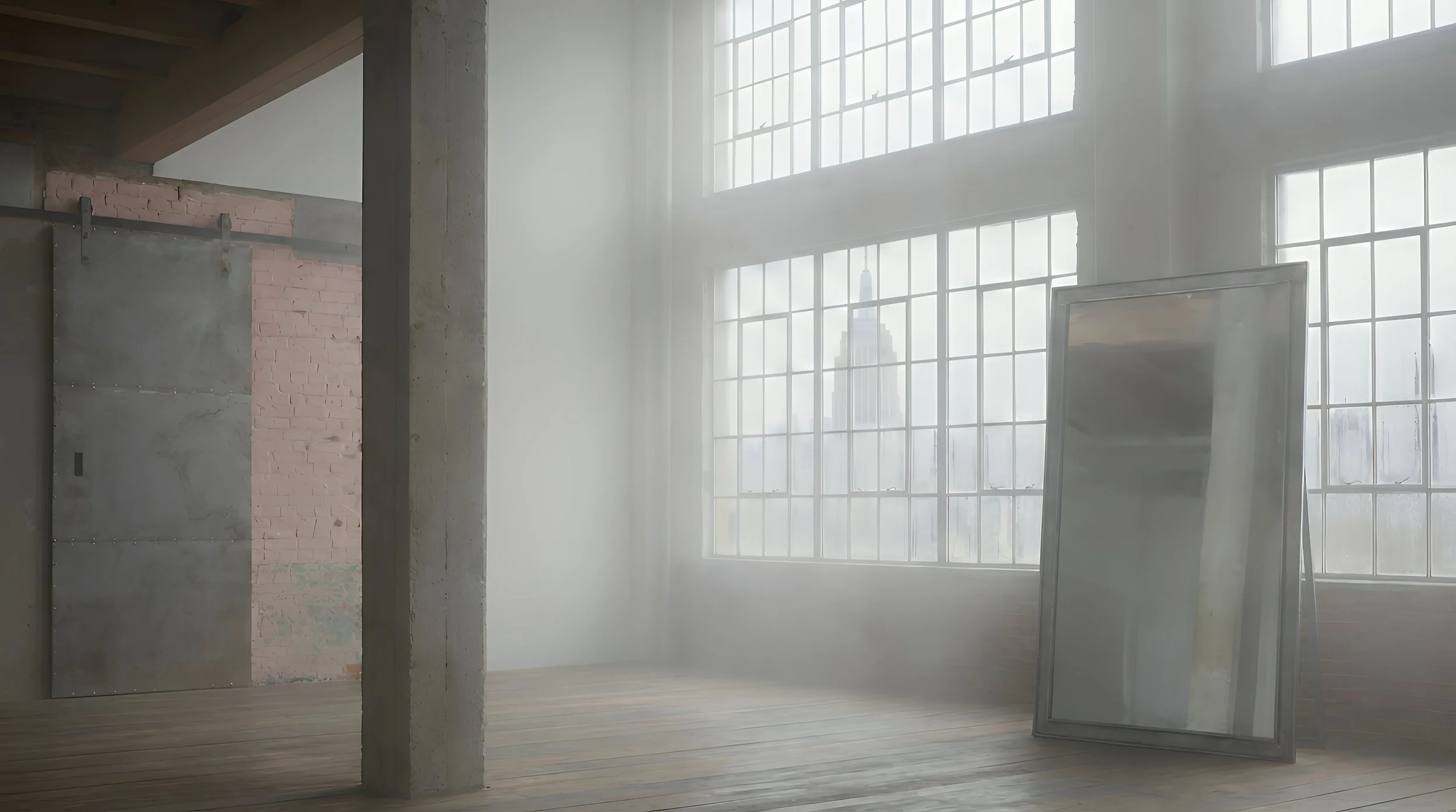
The plot of Burn This is built around four characters – Anna, Pale, Larry and Burton – whose lives are gradually reshaped following the sudden death of the homosexual roommate of Anna, Larry and Burton and the arrival of Pale, who comes to the loft they rent to collect the personal belongings of his late sibling. Anna is an emerging choreographer and the close artistic partner of the deceased, while Burton, her boyfriend, is a successful yet self-absorbed science-fiction screenwriter driven by material ambition. Larry is Anna’s confidant and “guardian angel”, supporting her throughout the play as she navigates a period of personal transformation. As the four characters struggle to overcome their grief, Anna creates a choreographic masterpiece that becomes a catalyst for her relationship with Pale, who initially appears as a rather brutal and rude character. Gradually, the two of them are drawn closer to one another, as Pale, through the final words of Malkovich’s recorded voice, confides to Anna: “I’m gonna cry all of your hair”, ready to let go of his grief and open himself to deep love. Through this multi-layered interwoven story, the play explores themes of identity, homosexuality, inner truth and self-discovery, while dealing with grief and love. For Weissbard, the original script serves as a seed for creating a new narrative that explores the same themes while remaining rooted in the spirit of the play, transforming it into a sensory and intimate experience for the audience.
As a script, Burn This has had a profound impact on the director, who for quite a long time kept unrealised his creative idea of transforming the play into a dance project for the theatre, conceived as a dance “ergon” (in Greek “work”, here also meaning “creation”) made specifically for a theatre venue. Introducing it as a dance project for the theatre, highlights the fact that, ontologically, this dance work cannot be presented in any other location other than the site of the theatre itself, which has its own specificities: the precise time of beginning and ending a performance; a predefined duration corresponding to the flow of events within the performance’s structure; the use of stage lighting and scenography and the attention to the engagement of the spectators within this spatio-temporal situation, almost Aristotelian in its unity. At its core lies the silent dialogue between the audience and the performers, based on the shared experience of time and space. These conditions, summarised in the notion of a dance project for the theatre, are central for a multifaceted artist such as Weissbard, who bridges the worlds of performance and visual arts while acknowledging the specificities and possibilities of these disciplines, especially when they merge with one another.
BURN unfolds in a loft that references a space deeply cherished by Weissbard: his grandfather’s old factory located inside the Starrett-Lehigh Building, a modern industrial building from the 1930s in lower Manhattan. As the performance evolves, the loft transforms into a heterotopia – what Michel Foucault described as a place capable of “juxtaposing in a single real place several spaces, several sites that are in themselves incompatible”. In this way, the loft simultaneously becomes a living room, a dance studio, a performance space and even a space of memory, connecting Weissbard’s past with the present. The plurality of mirrors on stage, as additional forms of heterotopia, reflects in the Lacanian sense the multiplicity of identities that the performers seek as their individual journeys unfold. The mirrors evoke the process of self-recognition and identity-building that psychoanalyst Jacques Lacan associated with the formation of the individual, suggesting a stage where identities are constantly shifting and redefined.
At the same time, stage lighting remains at the heart of the project. Weissbard, originally a light designer, naturally progressed during his artistic career towards theatre direction, approaching it as a means of representing ideas and content on stage. For him, light is fundamentally about the void and the ways it inhabits empty space. Light moves, marking the progression of time and ultimately becomes the element that enlivens space and provides a distinct atmosphere, as architect Peter Zumthor suggests in his discourse on architectural atmosphere. In this strongly visually driven approach, Michael Galasso’s musical compositions – selected personally by Weissbard from the composer’s archive – follow and support the dramatic structure, adding an additional level of dynamism. Galasso’s music, particularly his works created for the theatre, demonstrates a strong awareness of theatrical processes of storytelling and functions like an additional character within the overall dramaturgy of the performance. This is hardly coincidental, considering that since 1973, Galasso has been a long-term music collaborator of the renowned American theatre director Robert Wilson on numerous productions, including The Lady from the Sea (1988), which was revived in many different languages, Dream Play (1998) and Les Fables de la Fontaine (2004).
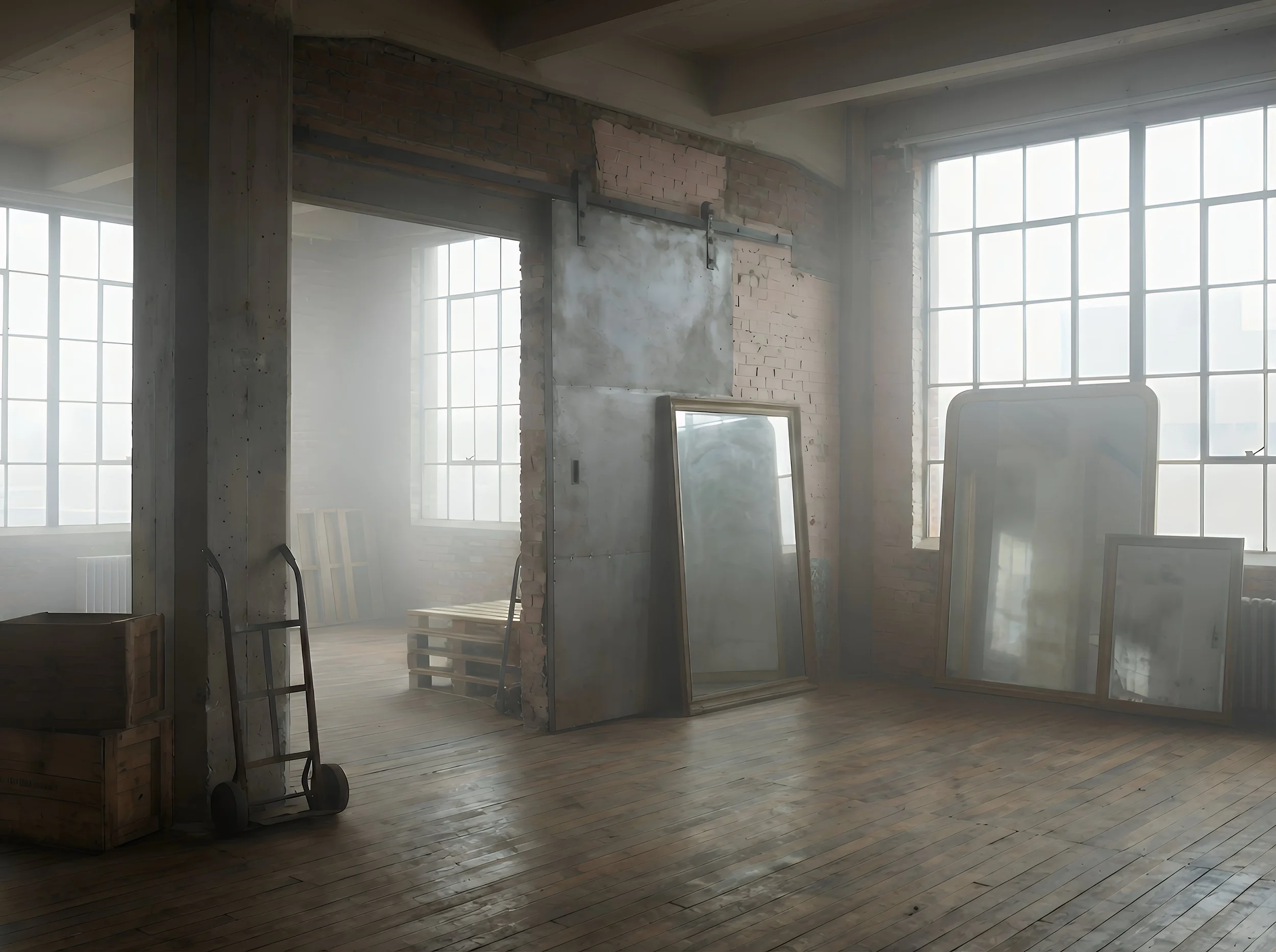
Seeking to connect a specific chapter of American history and culture with the present, BURN opens to the creative input of four distinct collaborators, who enrich the artistic process as both choreographers and dancers. This creative approach allows artistic freedom for each individual artist but at the same time requires negotiation and collective dialogue – often open to creative collisions – around themes such as the meaning of movement in shaping the identity of each character, the emotions each role evokes, the arc of compositional dynamic and intensity throughout the piece and its individual sections, and the overall structuring of the material. Inevitably, this process requires time and often involves hard decisions about what material to retain or discard, change or reorder, revealing how artistic creation is not a rigid process but rather one that oscillates between delight, discovery and struggle.
BURN is constructed by Weissbard as a collaborative process between four choreographers, who also perform and interpret their roles as dancers, in addition to creating movement for their peers and the various choral scenes performed by the corps de ballet of Teatro dell’Opera di Roma. Their individual choreographic languages and theatrical sensibilities are juxtaposed throughout the work, each bringing distinct nuances from across the spectrum of dance and dance theatre. Ève-Marie Dalcourt (Anna) is a former Canadian dancer for the Nederlands Dans Theater II. Her first collaboration with Teatro dell’Opera di Roma took place in May 2025, when she was selected by Alexander Ekman to restage his work Cacti for the corps de ballet. Her virtuosic physicality blends the human with the non-human, deconstructing a rigorous technique that manifests through sequential movements, rippling and echoing throughout the body. Brussels-based Brandon Lagaert (Pale) brings to the work the influence of his ten-year experience as a performer for the dance theatre company Peeping Tom, which shaped his compositional and devising approach to performance and theatre making. “Think like an actor but move as a dancer” is the guiding motto of his own company KAIHO, through which he also contributes to the creative process of BURN, weaving together movement, visual material and sound. Damiano Ottavio Bigi (Larry) is a former Italian dancer of Tanztheater Wuppertal Pina Bausch, who has also collaborated with the Greek director and choreographer Dimitris Papaioannou. Since 2020, he has been the co-founder, together with Alessandra Paoletti, of Fritz Company, an artistic partnership that merges their individual artistic trajectories and combines dance theatre with visual poetry. Jonah Bokaer (Burton) is a New York-based performer whose long-term collaborations with Merce Cunningham and Robert Wilson have shaped much of his choreographic practice for contemporary theatre, as well as his distinctive physical approach to movement, which embraces theatricality. As an LGBTQIA+ activist, he is a constant reminder and a tangible link to many of the themes that permeate Burn This.
Conceived as a dance project for the theatre, BURN belongs to the legacy of translation from the language of the theatre, where meaning is primarily communicated through words, to the language of dance, where meaning is conveyed through the moving body and is further enriched by the moving architecture of light and stage design. Yet, the co-creative and interdisciplinary approach of Weissbard differs significantly from a purely story-driven ballet or performance work. Set within the institutional context of the opera house for which it is created – usually a space dedicated to safeguarding the memory of the past – BURN inevitably entails a series of risks and challenges. Firstly, the creation of a new work, whose final outcome remains unknown until the conclusion of the creative process, contrasts with the secure choices of the numerous re-makings and reconstructions of existing works that often dominate the programming of every season. Secondly, the development of a new work through a process that requires time for elaborate decision-making differs from the timeframe needed to learn and interpret an existing work collectively; simply put, new creation needs more time. Last but not least, the devised approach proposed by the director challenges the hierarchical model in which a single choreographer leaves the creative imprint on both the work and the bodies of the performers. Despite the challenges posed by the uncertainty of the creative outcome, the need for longer production periods and the fusion of artistic languages at the expense of stylistic clarity, the production of BURN affirms the ongoing commitment of the director of the corps de ballet of Teatro dell’Opera di Roma, Eleonora Abbagnato, to successfully open the institution to contemporary artistic practices.